Friday, February 20, 2009

Intel Core 2 Extreme X7900 Officially Announced


Intel officially announced today the Core 2 Extreme X7900 laptop processor at the 2007 Games Convention in Germany.
Designed for use in “Santa Rosa” platform-based gaming/high-performance notebooks, Intel’s Core 2 Extreme X7900 has two processing cores clocked at 2.8GHz. As same as the earlier introduced Core 2 Extreme X7800 at 2.6GHz, the X7900 mobile CPU features 800MHz front-side bus and 4MB of L2 cache. It is also overclockable.
(more…)
In Laptop News, Laptop CPU, Gaming Laptop PCs 2 Comments »

HP Pavilion dv6500z, dv9500z Available


Hewlett-Packard updated today its HP Pavilion notebook lineup with the dv6500z and dv9500z models, both powered by AMD’s processors and NVIDIA’s nForce 630M chipset.
The 15.4-inch HP Pavilion dv6500z and the 17-inch dv9500z feature AMD Turion 64 X2 dual core processor options. The dv6500z is offered with Turion 64 X2 CPUs clocked at up to 2.2GHz, while the dv9500z additionally provides a choice of the latest Turion 64 X2 TL-66 processor at 2.3GHz. By default, these laptops ship with the NVIDIA GeForce Go 7150M graphics integrated into the nForce 630M chipset, while for more demanding users there is the NVIDIA GeForce 8400M GS dedicated video option.
(more…)
In Laptop News, HP Pavilion 3 Comments »

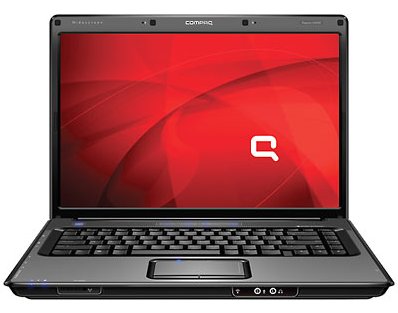
Compaq Presario V6500Z - a New Affordable Laptop


Hewlett-Packard has expanded its 15.4-inch notebook lineup with the affordable Compaq Presario V6500Z, featuring AMD processor and NVIDIA nForce 630M chipset.
The Presario V6500Z is offered with a choice of the AMD Sempron Mobile or the Athlon 64 X2 dual core CPU. The laptop’s chipset incorporates the NVIDIA GeForce Go 7150M integrated graphics, which manages the 15.4″ widescreen 1280-by-800 pixels display. There is no dedicated graphics module option. The HP Compaq Presario V6500Z comes with 512MB DDR2, 1GB or 2GB of system memory, and with a 80GB, 120GB or 160GB 5400rpm SATA hard drive, depending on the customer’s choice. There are also DVD burner and Combo drive options.
(more…)
In Laptop News, Cheap Laptops, Cheap New Laptop, HP Compaq 2 Comments

Intel roadmaps 3.2GHz desktop 'Nehalem' CPUs


Intel roadmaps 3.2GHz desktop 'Nehalem' CPUs [Intel] [motherboard] [bus] [processors] [CPU] Intel will introduce a trio of desktop processors based on its next-gen 'Nehalem' architecture in Q4, the latest whispers from Asian motherboard-maker moles allege. ... Nehlam at Intel Developer Forum...Relevance: 51

Toshiba Offers Laptop with 128GB Solid State Drive


Toshiba Offers Laptop with 128GB Solid State Drive [motherboard] [processor] [Intel] [control] [Portege] Toshiba said this kind of mounting means it can produce a motherboard that is one-third the size of a normal 15.4-inch notebook ... Our managed hosting solutions allow you to retain full control of your OS and application infrastructures....Relevance: 43

Intel Mobile Pentium III-M 1200 - RH80530GZ009512 / RH80530GZ00951E (BXM80530B120GD)


Intel Mobile Pentium III-M microprocessors were based on the last Pentium III core - Tualatin. These mobile processors featured a few performance enhancements such as larger size of L2 cache, data Prefetch Logic (DPL) feature and increased Front-Side Bus frequency. The mobile microprocessors had lower core voltage and power consumption than Mobile Pentium III CPUs based on Coppermine core. The mobile CPUs also had additional Deeper Sleep power-saving mode. Some OEM and all boxed Pentium III-M processors were packaged in 478-pin micro FC-PGA package. All other OEM mobile processors, including all low-voltage and ultra low voltage processors, were packaged in 479-ball micro FC-BGA package.

Intel Mobile Pentium III 1000 - KP80526GY001256 (BXM80526B001256)


Mobile Pentium III microprocessors in Ball Grid Array and micro Pin Grid Array packages included many features present on desktop Coppermine Pentium III CPUs. All mobile processors had 100 MHz Front Side Bus, 32 KB level 1 cache, 256 KB level 2 cache integrated with the core, and MMX and SSE instruction sets. The mobile microprocessors had slightly lower core voltage than desktop processors, and included additional power saving modes such as Quick Start and Deep Sleep. Majority of mobile CPUs also included SpeedStep mode. Mobile Pentium 3 processors were produced at speeds ranging from 400 MHz to 1 GHz.

Intel Pentium III Xeon 667/256KB - 80526KZ667256 5/12V (BX80526KZ667256)


Pentium III Xeon family was manufactured using two different cores:0.25 micron Xeon processors are based on Tanner core, which is very close to Pentium III Katmai core. The main difference between Tanner Xeons and Katmai Pentiums lies in the size and operating frequency of level 2 cache: the Xeon CPUs have much larger, up to 2 MB, L2 cache running at CPU frequency, that is twice as fast as Katmai L2 cache.Next generation of Xeon processors was produced using 0.18 micro technology. There were two different versions of these processors - with 100 and 133 MHz Front Side Bus frequency. All Xeon microprocessors with 133 MHz FSB were in effect Pentium III Coppermine processors in Xeon package. Like desktop Pentium III CPUs, they had 256 KB level 2 cache integrated on the processor core and didn't support quad-processing. Performance of these Xeons was no better than performance of desktop processors. Later Intel released real Xeon processors that could work in 4-way systems and had very large, up to 2 MB, L2 cache. The disadvantage of these processors was lower FSB - only 100 MHz.All Pentium 3 Xeon CPUs were packaged in the same bulky and heavy 330-contact SECC cartridge as Pentium II Xeons.

Intel Pentium III 600 - RB80526PZ600256 (BX80526C600256)


New generation of Intel Pentium III processors with Coppermine core featured not only better manufacturing technology (0.18 micron as opposed to 0.25 micron for Katmai core), but also different cache architecture and new package type. Smaller size of the new core allowed Intel to put level 2 cache on the the same die as the core. While new cache was two times smaller than the L2 cache on Katmai processors, it was twice as fast and had a few additional performance improvements. Because external cache chips were no longer required for the new core, it became possible to put the core on smaller and cheaper Flip-Chip Ping Grid Array package.

Intel Pentium III 400 - 80525PZ400512


400 MHz (133 MHz bus)
512 KB L2 cache
Single Edge Contact cartridge 2 (slot 1)

Produced later than the DC1EC501A400 CPU this engineering sample has very significant feature - 133 MHz front side. Increasing front side bus speed from 100 MHz to 133 MHz allowed to increase processor performance by 5% - 10% on average.

It's worth to note that this processor was manufactured almost 11 months before the release of first Katmai processors with 133 MHz bus speed.

Lenovo unveils its mini-notebook, the IdeaPad S10


China's Lenovo says it will enter the netbook market in October with the "super-slim, super-small" $399 IdeaPad S10 running Windows XP. It also "plans to introduce netbook models designed specifically for students and educators."

It looks as though it will be bigger than average, having a 10.2 inch LED screen, which is the sort of size that became hugely popular on early IBM ThinkPads. It will also have Wi-Fi, Bluetooth, an 85%-size keyboard and an Intel Atom processor. Otherwise there will be two configurations: 512MB and an 80GB hard drive, and 1GB plus a 160GB hard drive.

The announcement was made from Research Triangle Park in North Carolina, which is where IBM ThinkPad announcements were made before Lenovo bought IBM's PC division. IBM used to sell very similar machines, including the excellent ThinkPad 240X, but for around $2,000 or more.

The IdeaPad S10 looks quite similar to the Acer Aspire One, but Lenovo has a better chance of selling netbooks to corporate users, who are still mostly ThinkPad buyers.

Dell's netbook is still awaited with interest.


Comments (1) ·

Samsung X360 billed as "lighter than air" or MacBook Air


Samsung has been showing off its forthcoming X360 laptop at the IFA exhibition in Berlin. At 1.27 kg, it's lighter than a MacBook Air at 1.36kg. (There are lighter machines such as the Toshiba Portege, but with 12.1inch instead of 13.3inch screens.)Samsung says: "the X360 sets a completely new standard in mobile computing -- offering a comprehensive set of features unlike anything of its kind on the market."Well, it has more features and ports than the heavily compromised Air, including a 7-in-1 card reader, three USB ports, PCI Express Card Slot (34mm), HDMI, VGA, RJ45 (Ethernet) and a docking slot. You can also have either a Solid State Drive (64GB or 128GB) or a traditional 120GB drive. Other features include a fingerprint reader, webcam, Bluetooth and Wi-Fi.Unlike the sometimes-overheating Air, the X360 also has a proper ULV (Ultra Low Voltage) processor -- probably not cheap -- and X4500 graphics. With an SSD and 6-cell battery, this enables Samsung to claim a battery life of "up to 10 hours", depending on use. But I'll be impressed if I get more than 5 or 6 hours.....From what I can see of the various IFA videos and photos, the battery projects at the back, like most 6-cell packs. This gives Samsung no hope of getting anywhere near the "thinnest" machine. The X360's thickness is 1.67-3.09cm, which compares with the MacBook Air's 0.4-1.94 cm. Not that it makes the slightest bit of difference in reality. (Well, not from the point of view of portability. Thinner is just worse -- less usable -- if it means giving up ports, expansion slots and a removable battery.)From the photos and videos, it also looks extremely glossy, which may not go down too well with the comfortably-matt ThinkPad crowd.The X360 is expected to reach Europe next month. Samsung hasn't stated a price. I reckon it's unlikely to cost less than £1,200 with a hard drive, but it could be in the same ballpark as the Air.
Comments (20) ·

Intel Motor Bike quadcore


window.google_render_ad();
In order to as it should be celebrate the 30 years of data processing embarked, Intel revealed a rather strange product since it is about a motor bike designed by “Orange County Choppers” accompanied by an information processing system containing processors quadcore.The computer integrated into this motor bike can act as detachable UMPC. It is equipped with a sensor of fingerprints, cameras/screens to replace the rear view mirrors, of a system GPS, an audio/video system embarked, of a connector industry without wire WiFi. The embarked computer also makes it possible to post a whole heap of information/gauges.Intel also joined the firm Black Diamond Advanced Technology, to protect the computer embarked against dirtiness, the shocks, the vibrations and the mould. For those which will not be likely to be able to acquire this concentrate of technologies, Intel installed a similar virtual motor bike in the play Second Life.The firm also benefits from it to officialize new processors quadcore Xeon for the professional market of 7000$$ (2.GHz) and E5345 (2.33 GHz) with 8 MB of memory hiding place.

Intel® Desktop Board DG965MQ


The Intel® Desktop Board DG965MQ is based on the Intel® G965 Express Chipset that supports 1066-MHz system bus, Intel® Graphics Media Accelerator X3000 (Intel® GMA X3000) with Intel® Clear Video Technology, dual-channel DDR2 800 memory and discrete PCI Express* x16 graphics in the microBTX form factor. Premium features such as support for Intel® Core™2 Processor with Viiv™ Technology∇, Intel® High Definition Audio (enabling 7.1 surround sound), Dolby* Home Theater* certification, Intel® PRO 10/100/1000 Network Connection and 1394a deliver stability and new features for consumers to enjoy a great digital entertainment experience. This Intel Desktop Board comes with the software required to meet Intel® Core™2 processor with Viiv™ technology brand verification requirements, which simplifies the task of building a PC based on Intel® Core™2 processor with Viiv™ technology.The Intel® Desktop Board DG965MQ is Microsoft Windows Vista* Premium Ready. The Intel® G965 Express Chipset fully supports the visually stunning Windows Aero* user interface with amazing transition effects and realistic animations.

Wednesday, February 18, 2009

Intel updates junior laptop


Intel has unveiled a new version of its Classmate mini-laptop reference design. Now targeting consumers and schoolchildren both, and running Linux or Windows XP, the device has a 30GB hard drive, a revised touchpad and keyboard, webcam, and a nine-inch screen.(Click here for a larger view of the Classmate/2Go PC)
Spread the word:digg this story
The original Classmate debuted in March 2007 as part of Intel's "World Ahead" program aimed at schoolchildren in emerging markets. Available with a 1GB SSD (solid-state drive) packing Linux or a 2GB SSD packing Windows XP, the Classmate was widely viewed as Intel's response to the Linux- and AMD-based OLPC (One Laptop Per Child) device.
Intel's second-generation Classmate(Click image to enlarge)The second-generation Classmate will be sold directly to the public. While Intel created the reference design (right), OEMs in various regions will be responsible for manufacturing and sales. First to announce is Portland-based Computer Technology Link (CTL), which says it will sell the Classmate as the 2Go PC (seen above) for prices ranging from $300 to $500.The Classmate now includes new features intended to help it compete with other mini-laptops, such as Asus's hot-selling Eee PC. While Intel has retained the three-pound device's kid-friendly rounded corners, it switched from the original Classmate's round touchpad to a conventional-looking square design. The Classmate also now includes a right-shift key, which was previously missing.Technical upgrades include a nine-inch screen, offering the same 800 x 480 resolution as the previous seven-inch panel. The new Classmate also includes a VGA-resolution webcam and an available six-cell battery, according to the company.Notably, Intel has moved away from flash storage to a 1.8-inch (sub laptop-sized) hard drive. With a suitable operating system installation, the Classmate could still be configured as a solid-state device, since it includes a bootable SD slot.Announcing the Classmate at its Intel Developer Forum (IDF) in Shanghai, China, Intel said future iterations of the product will use its Centrino Atom chipset. However, today's second-generation device uses a 900MHz Celeron ULV processor and an Intel 915GMS chipset. A single DIMM socket comes with 512MB of RAM installed, but supports up to 1GB of 400/533MHz DDR2 RAM.The Classmate includes 802.11b/g wireless networking, capable of working in a mesh configuration that allows multiple devices to share a single Internet connection. It also has a port for a wired 10/100 Ethernet connection.Other interfaces, pictured below, include microphone in, headphone out, and dual USB ports. Finally, the Classmate also offers stereo speakers. Unlike "grownup" laptops, however, the device does not include a VGA output.

Intel launches R&D initiative to invent PDA


IDF Intel today disclosed a raft of technologies that will drive a research initiative it hopes will put the Assistant back into the Personal Digital Assistant, one of the most inappropriately applied acronyms in the history of personal computing.
Intel's plan is called 'Carry Small, Live Large', and while the slogan's new, the concept is decades old, stretching back to erstwhile Apple CEO John Sculley's August 1993 launch of Newton, the operating system and platform on which the first ever PDA, the MessagePad, was based.
Sculley defined a PDA as a handheld gadget smart enough to operate almost autonomously, intelligently linking disparate sources of information for the user's benefit. There was no internet then, at least not for public use, so the Apple CEO was thinking about personal information management. But the notion still applies, and is even more powerful a concept now we have both the internet and the ability to connect to it wirelessly.
While the MessagePad turned out not to be quite as smart as Sculley claimed it would be, subsequent handhelds were arguably even less intelligent, but they all managed to have the term 'PDA' attached to them. They still do, even though the traditional PDA device has now been all but killed off by the smartphone.
None of them have aver delivered anywhere near the functionality Sculley described, but give Intel's researchers five to ten more years and his vision might just come to be realised.
It goes without saying that the Carry Small, Live Large initiative is predicated on shrinking silicon chippery to cram more components into a shrinking die space, allowing handhelds to get smarter and become more connected.
But that's just the customary trend. CSLL assumes all this extra performance can be used to make PDAs more than mere data carriers and readers. So the built-in GPS and Google Maps app know exactly where you are and can feed that into your other apps. The gadget's multi-mode radio is capable of hopping from Wi-Fi to 3G or WiMax (maybe) right at the moment you leave the building, so you're connectivity's not interrupted, ensuring the route the device has planned for you - it knows you have a meeting in a hour - can be changed as soon as it learns there's a big traffic foul-up on the way.
Your PDA's already checked the weather report and told you to bring a brolly.
In other words, the machine's pro-actively assisting you rather than simply presenting information when you ask for it.
This requires fresh smarts - and probably a new operating system too - but it's on its way. Right now it just requires greater performance to allow all the intelligence-simulating data monitoring to be carried out without gobbling up the battery charge. Ditto the real-time video recognition techniques it showed today - right now, these require way more processing cycles than handhelds currently offer, or will for some time.
The 'one-radio, multiple wireless technologies' strategy appears closer to fruition. Intel has built an analogue-to-digital convertor that's capable of sampling the wireless environment around it - it has an integrated spectrum analyser - allowing it to adapt its resolution to meet the needs of the moment rather than assume a worst-case scenario.

Prototyped: Intel's 'digital pre-distortion' power amplifier
Intel's first smart ADC has a 12-bit quantisation and is designed to work with both 802.11n Wi-Fi and WiMax. So too is the 65nm power amplifier it talked about, and we wonder if both will find a home in 'Echo Peak', the Wi-Fi and WiMax radio module Intel will release in May as part of its next major Centrino revamp.
So too may techniques like 'digital pre-distortion' - modifying a signal in the digital domain so that when it's converted to analogue for transmission it's in a form best suited to the wireless environment of the there and then.
This is stuff Intel can do. But while it can demo some other elements of the Carry Small, Live Large programme, it won't be able to implement them on its own. A case in point: having a handheld detect it's in the presence of an HD TV and automatically 'borrow' the screen as its own display mechanism.
Intel showed a wireless chip capable of sending data over the 60GHz band at a rate of around 5Gb/s, but at what point in the image rendering pipeline the data leaves the handheld to be streamed to the TV remains to be determined. Ideally, it needs better rendering technology in the telly, but that it can't do without the help of TV manufacturers, and suddenly its reached the limit of its research - from this point on, CSLL becomes an industry initiative, and a discussion about setting standards.
That gives Intel's researchers more time to work on miniaturisation and power conservation, and to deliver the silicon from which real PDAs can be made. If they're right about the timeline, we could see much of this coming to market by 2013 - just in time for the 20th anniversary of the event at which the term PDA was coined

Intel NG80386SX-25


Intel NG80386SX-2525 MHz100-pin plastic QFPIntel 80386SX microprocessor was a cost-effective version of the 80386DX. The SX processor had 16-bit external data bus - this allowed the CPU to work with cheaper 16-bit hardware, but at the same time it made access to 32-bit memory data slower. The 80386SX also had 24-bit address bus, which limited CPU's physical memory to 16 MB. Because the processor didn't work with 32-bit buses like the 80386DX, it didn't require as many signal pins. The 80386SX processors were manufactured in 100-pin package, or 32 pins less than the number of pins on DX package.

AMD A80386DX/DXL-20


AMD A80386DX/DXL-2020 MHz132-pin ceramic PGAAMD 80386DXL was a fully static microprocessor, object-code and pin-compatible with 80386DX CPU. The DXL processors had lower power consumption than Intel 80386DX CPUs. Power consumption could be reduced even further by reducing CPU frequency. If necessary, the CPU could be stopped completely without loosing the content of CPU registers. In this mode maximum power consumption of the CPU was less than 0.001 Watt.

Intel's MID UMPCs: So long XP/Vista, hello Linux


Intel's MID UMPCs: So long XP/Vista, hello Linux
by Thomas Ricker, posted Apr 16th 2007 at 4:35AM
Big news on the UMPC front this morning folks. Looks like Intel is shedding the Origami gorilla (read: Microsoft) as they prep a Linux-based platform to compete with Vista and XP-based UMPCs. Intel will unveil their new MID (Mobile Internet Device) platform at the Intel Developer Forum in Beijing later this week. Unfortunately for their marketing department, they've already posted the slides. Unlike UMPCs which target mobile professionals, MIDs will target "consumers and prosumers" and feature a range of screen sizes from 4.5 to 6-inches with resolutions from 800 x 480 to 1024 x 600. Yup, these are the same devices we spotted under the in-house name of McCaslin sporting Intel's codenamed "Stealey" class of dual-core, battery-friendly processors. Intel's reference designs run a tweaked, 500MB version of China's RedFlag MIDINUX which boots in about 18 seconds (less than 5 seconds from standby) to a mix of open-source and proprietary code including Google Maps and web-based office and enterprise applications. Data access will be provided via HSDPA and WiFi. More GUI shots and reference designs in the gallery below.

intel mac mini is upgradable


Intel Mac Mini is Upgradable
Mar 02, 2006 in , , ,
XWelcome Googler! If you find this page useful, you might want to subscribe to the RSS feed for updates on this topic.
You were searching for "intel". See posts relating to your search »
No related posts.
Today was the day that just about everyone that ordered a mini on the 28th received it via FedEx. Tons of pictures of the Intel Mac Mini’s internals flooded the internet this morning. Shots of the double-layered DDR2 200pin SO-DIMMs slots, the IR port next to the optical drive responsible for the Front Row remote control feature, the new Serial-ATA hard drive interface and more surfaced. However, one thing that caught my attention was the use of a socket for the CPU rather than a soldered-on, unreplaceable processor. The big connotation with this is that you can buy a cheaper Mac Mini such as the 1.5GHz Core Solo (assuming the motherboard and software is identical between Core Solo and Core Duo versions) and upgrade it to something like, say a 2.0GHz Core Duo. I still have to sift through some whitepapers and find exact heat specifications for the 1.83, 2.0 and 2.16GHz Core Duos to see if the Mac Mini’s heat sink and fan combination would be up to the task.

Similar to the overclocking craze with the old Mac Mini, of which I became victim, I think that we will start to see a hardcore modding scene revolve around putting aftermarket processors in their cheap minis and adapting various cooling solutions to fit them. I already have plans to create a copper cooler, with the help of a friend with access to a CNC, for a new mini which I hope to purchase soon.
The older PPC-powered Mac Mini was known to be a based around weak chip. The Core Duo platform, utilizing Socket 479 (different pin-outs than your garden-variety P4), is a proven benchmarking and overclocking machine. For example, in PC’s, a Core Duo 2.0GHz can easily reach 2.5-2.6GHz on air. Apple’s decision to incorporate a socket, as they did in the Intel iMac as well, was a great move. Not only can they presumably use the same motherboard and slap on different CPUs as demand requires, but they now have caught the attention of the fast-paced modding community. Maybe we will start to see some modding switchers. I will tell you one thing though. If someone ever vapor phase change cools the new Mac Mini, it might be me as my roommate builds those things for fun.

-->

Intel X38 Express


We'll start the analysis of the new chipset family with its top representative. It's not yet available in the market and will debut only in Q3 together with the second wave of the new chipsets. Note that top products used to be marked with an increased index number (i915 - i925). And now the top product is marked with the X prefix - Intel uses it to designate any general improvements (not only in chipsets, but in processors, graphics cards, etc). The following block diagram shows the key characteristics of the X38:
Let's enumerate the key functions of its Northbridge:
Support for new Celeron and Pentium processors as well as all Core 2 models (Duo/Quad/Extreme) with 800/1066 MHz FSB, including future models with 1333 MHz FSB
Dual-channel DDR2-533/667/800 or DDR3-800/1066/1333 memory controller, up to 4 DIMM modules with the total size of up to 8 GB (with ECC), Fast Memory Access and Flex Memory technologies
Twin x16 PCI Express 2.0 slots
DMI bus (~2 GB/s bandwidth) to the new ICH9/R/DH/DO Southbridge.
We can see well that all key characteristics of the chipset have been modified. Let's analyze all innovations one by one.
CPU support. It must be noted here that all 3-series chipsets officially don't support Celeron D, Pentium 4, and Pentium D processors (as well as their Extreme Edition modifications). The lack of support is caused not by the modified characteristics of the processor bus, but by the new motherboard standard - FMB (to be more exact, by VRM), which supports future 45 nm processors, instead of 90 nm (and older) models. There is no direct connection between this chipset and its power supply subsystem, of course. But manufacturers almost always follow Intel design standards. So it's highly improbable that we'll see many Intel 3x models with support for "pre-Core 2" processors. To say nothing of motherboards supporting both Prescott and Penryn.
What concerns the Core 2 support, X38 does it perfectly: this chipset will officially support all existing and future models of Core 2 Duo, Core 2 Quad and Core 2 Extreme processors (including quad-core modifications) with a 1333 MHz bus. All low-end families of the new processors (Celeron 400 and Pentium E2000) will work with the X38. But the top chipset will not support Celeron 400 for marketing reasons.
Memory support. Features of the DDR2 controller have not changed in all new chipsets (no alterations are in view here, all features described in the specifications are already implemented). But motherboards based on Intel 3x will work with DDR3 memory as well. Peculiarities and theoretical performance of the new memory type are already analyzed in our review. This article will touch upon practical aspects only. Here comes the first traditional question - is simultaneous support for DDR2 and DDR3 possible? The situation is not different from DDR and DDR2: Intel does not officially test such combinations, but motherboard manufacturers can do it on their own. Our constant readers have surely heard about several models of combo motherboards. Besides, our today's tests were run on one of such models (but we'll hardly see X38-based combo models). DDR2 and DDR3 memory modules cannot work simultaneously, of course: the motherboard will initiate memory modules of only one type.
DDR3 is very good: it features lower heat release (memory voltage is reduced, so that even DDR3-1066 will dissipate less heat than DDR2-800); a different location of the key notch will not let you mix up DDR2 and DDR3 memory slots on combo motherboards. As you already know, DDR3 is supposed to work at up to 800(1600) MHz. X38 will support one of the fastest modifications - DDR3-1333. But the situation with availability and timings of memory at the time of Intel 3x debut is not very good. DDR3 modules are not available in the market on a mass scale. Even elite manufacturers (such as Corsair) take advantage of this situation and sell modules with mediocre characteristics at fabulous prices. Rational readers are recommended to wait until their prices go down and their characteristics are improved. As for now, analysts forecast that DDR3 will take up 50% of the market only by 2009. It will hardly capture 10% by the end of 2007. And in the practical part of the article we'll see what we are offered at such a high price.
PCI Express 2.0. Intel strikes a pre-emptive blow here. It has finally designed a chipset with support for two full-speed PCI Express x16 interfaces, which have been available in top products from competitors for a long time already (this configuration does not have a noticeable advantage in most cases, but principles are more important), and has implemented a host controller of the second version. PCI Express 2.0 still allows to use old graphics cards, because it has the same slots, compatible both ways. The new features of PCI Express 2.0 will hardly be very interesting for the graphics interface, except for two points. Firstly, performance of each PCI Express lane is doubled, so a single lane (PCIEx1) has a bandwidth of 500 MB/s each way. The total bandwidth of a 16-lane PCIEx16 interface is 16 GB/s. I repeat, there will be no practical advantage of this system in the nearest future.
Secondly, the power applied to the bus is also doubled: PCIEx16 slot of the first version provided up to 75 W, now a graphics card can get 150 W. (I wonder how these additional Watts get into the bus - will X38-based motherboards have a special additional power connector?) However, top accelerators neglect the power supply from PCIEx16. You can use one of the two on-board power connectors at best. It's similar to the situation with PCI Express graphics cards with on-board power connectors (75 W from the bus turned out to be insufficient) that appeared with the launch of i915/925-based motherboards. However, we should thank SLI/CrossFire for that: top graphics cards are first of all designed for tandem configurations - while a single graphics card may theoretically work on the power from the bus, the second graphics card without an on-board power connector will not startup. What concerns joining graphics cards on Intel X38, everything is the same: CrossFire is officially supported. SLI is not supported and won't be in the nearest future.
X38 will come with a new south bridge of the ICH9 family. Functionality of this family will be examined below.
Intel P35 Express
This chipset belongs to the Performance group. The workhorse of the new series has the following architecture:

Intel / Orange County Choppers Bike Seat - High Angle Shot of OCC Intel Bike


Intel's Core 2 Extreme QX6700 processor


YOU'VE GOTTA LIKE Intel's Core 2 Duo processors. After struggling mightily with performance and power consumption problems in the latter-day Pentiums, Intel came roaring back with the Core 2 Duo, producing a chip that goes like stink without spinning the electric meter into a frenzy. Since it offers a better combination of processing power, energy efficiency, and overclocking headroom than the Athlon 64, the Core 2 Duo has quickly become an enthusiast favorite, capturing prominent spots in our system guide recommendations and prompting a new round of upgrades for many folks.
Now comes the CPU de grĆ¢ce, a processor that takes advantage of the Core 2 Duo's modest heat output by cramming two of those chips together into a single socket, a product Intel can plausibly claim is the world's first quad-core CPU. The Core 2 Extreme QX6700 isn't exactly cheap and doesn't run especially cool, but it will turn your spare bedroom into the computing equivalent of a government astrophysics lab and make the neighbors terribly jealous—provided your neighbors are total geeks.
What hath Intel wrought with this quad-core beast? Do four CPU cores make sense in a desktop PC, and what sort of applications can really take advantage of such power? Let's have a look.
Core 2 Duo times two equals KentsfieldWe won't dwell too long on the specifics of the Core 2 Extreme QX6700. This product, which lived its early life going by the code-name Kentsfield, really is two Core 2 Duo chips mounted together on the same package. If you want to know more about the Core 2 Duo's basic technology, I suggest you read our review of that processor. Intel has used this multi-chip packaging technique in the past to create "dual-core" processors, such as the "Presler" Pentium D. Lashing together two separate chips rather than making one large chip makes good sense from an economic standpoint, because smaller die areas tend to make for higher yields of good chips from each wafer.
The result of this multi-chip fusion is a processor that plugs into a regular LGA775-style socket and packs four processing cores alongside a total of 8MB of L2 cache. Cosmetically, it looks for all the world like any other recent Intel desktop CPU.
The Core 2 Extreme QX6700
But here's a fancy illustration Intel came up with to show what's under the hood:
The Core 2 Extreme QX6700 runs at 2.66GHz on a 1066MHz front-side bus, so its clock speed matches that of the second fastest Core 2 Duo, the E6700. (The Core 2 Extreme X6800 is the fastest at 2.93GHz.) Intel probably chose not to push any harder on clock speed in order to keep the QX6700 inside of a reasonable power envelope. The E6700's thermal rating, or TDP, is 65W, while the X6800's is 75W. Fittingly, the QX6700's TDP is exactly twice that of the E6700 at 130W. That's quite enough heat production for a desktop processor, and Intel has already established a 130W thermal envelope for Pentium Extreme Edition CPUs that use this same LGA775 infrastructure.
In fact, the QX6700 should be compatible with many existing Core 2-compatible motherboards via nothing more than a BIOS update. Some mobo makers have already published compatibility lists for Kentsfield. Then again, Intel says previous revisions of its own D975XBX "BadAxe" mobo aren't designed for use with the QX6700, so nothing is certain. You'll want to check with the motherboard maker to ensure compatibility before taking the plunge.
Because the QX6700 is an Extreme Edition processor, it comes with a customarily robust price tag of $999 and an unlocked upper multiplier to facilitate easy overclocking. Intel also plans to introduce a less expensive Core 2 Quad Q6600 CPU at some point in the first quarter of next year. That product will run at 2.4GHz and have a TDP rating of 105W.
Quad-core's performance challengesThe Core 2 Extreme QX6700 may be the apex of awesomeness in processors today, but it does face some formidable performance challenges, both due to its own nature and because of external factors. As a multi-chip package, the QX6700 contains two copies of a relatively well-integrated dual-core design. The two cores on each chip share a 4MB L2 cache between them, complete with dynamic partitioning and the ability to hand off ownership of data from one core to the next. Unfortunately, the integration between the QX6700's two chips is less than ideal.
Although they occupy the same package, their only means of communication is the system's front-side bus. The two chips must coordinate to ensure the sanity of the contents of their respective L2 caches via this bus. That will sometimes mean writing modified data out of one chip's cache into main memory and then reading it back into the other chip's cache—a positively eternal operation in CPU time. Both chips use this same bus to talk with the rest of the system, including main memory and I/O devices. Also, the presence of three electrical loads on the bus—two CPU chips and the core-logic chipset's north bridge—complicates matters. Someone looking to overclock his system's FSB may find less success with a Core 2 Quad or QX6700 than with a standard-issue Core 2 Duo.
If all of that sounds complex, just wait until you dig into the software issues. In order to take advantage of multi-core processors, software applications must execute by means of multiple threads. Today, very few games and not many other applications are multithreaded. We do try to take advantage of multithreaded applications when possible in our CPU test suite, but that's more difficult to do for four cores than for two. Many of the early optimizations for multi-core processors only use two threads, so their performance benefits are fully realized on a dual-core CPU.
There are reasons for this situation. For instance, one of our test apps, the MP3 encoding program LAME MT, employs a technique called linear pipelining that processes a portion of its work one frame ahead of the main thread and then buffers the result for later use. This method uses only two threads and can't take advantage of more than two CPU cores, but it is relatively easy to program. LAME MT's author says of linear pipelining: "In general, this approach is highly recommended, for it is exponentially harder to debug a parallel application than a linear one." On a similar note, we have seen measurable performance gains in dual-core systems using graphics drivers that offload some vertex processing to a second thread, but Nvidia's drivers, at least, don't appear to benefit from the presence of more than two cores.
The thread scheduling mechanism in Windows presents another challenge for quad-core processors, because it doesn't always make the best decisions. During our testing, for example, we found that the Core 2 Extreme QX6700 was turning in substantially lower performance running the same single-threaded task—a POV-Ray scene render—than the like-clocked Core 2 Duo E6700. This behavior was consistent across multiple benchmark runs and a little bit puzzling, until we looked at the Windows Task Manager as this process ran. Turns out the rendering work was bouncing around across all four of the QX6700's cores, playing havoc with cache locality and the like.
For the most part, you can expect the Core 2 Extreme QX6700 to perform like a Core 2 Duo E6700 in applications that use only one or two threads, but the QX6700 may prove slower in some cases due to additional bus overhead or bad thread management in Windows. Of course, when applications use more than two threads or more than two apps are running at once, the QX6700 will pull the tab back and pop open a can of whupass. We have some applications like that in our test suite, so you can see quad-core's true potential.
That potential, by the way, will almost certainly be more fully realized by future applications, especially games. Software developers know that multi-core processors are the future, and high-profile game development houses have been working on game engines that use multiple threads to handle various tasks. Heck, they practically have to given that the Xbox 360 and the PlayStation 3 have multi-core CPUs. Doing this kind of thing well is by no means a trivial undertaking, but the general trajectory seems to involve spinning off threads for specific game elements like A.I., physics, rendering, and audio. Industry giants like Microsoft and Intel have been pouring resources into helping the conversion to multithreading happen, and I'm convinced that it will.
If you're not convinced, perhaps a couple of statements that Intel forwarded to us from key game developers will help. Here's Tim Sweeney, Founder and President of Epic Games:
Multi-core computing is the new standard for PC games, and we at Epic are thrilled to see Intel leading the industry forward with Core 2 Extreme. Its four high-performance CPU cores enable a new level of realism in games, with realistic physics simulation, character animation, and other computationally-intensive systems. And here's Gabe Newell, President and co-founder of Valve:
Quad-core will change every aspect of PC gaming. It will change how we create our games, how we provision our service, and how we design our games. The scalability we've seen in graphics over the last few years will now extend to physics, AI, animation, and all the systems which are critical to moving beyond the era of pretty but dumb games. I don't think these guys are just issuing blanket statements of support in order to play nice. That's not been their style, historically. In fact, we will have more coverage of the specifics of Valve's multithreading efforts very soon, so stay tuned for that.
Between now and when those next-generation game engines arrive, owners of quad-core processors will have to find other ways to take full advantage of their CPUs. The test results on the following pages offer numerous examples of applications that use four threads, and beyond that, there's always the prospect of really, really good multitasking. My initial reaction is that you don't need four cores for good multitasking. Despite frequent abuse, my current Athlon 64 X2-based desktop system rarely slows down, and when it does, available CPU time isn't the likely culprit. Then again, I sure wouldn't complain about having four cores at my beck and call.

Intel D865PERL: Potential For Fine Tuning


In addition to a model with the 875P chipset, Intel also sent a board with the 865PE to the test. It must be said from the outset, however, that this board is by far the slowest in the whole test field. The weaknesses can be seen in the memory interface, which only allows conservative timings. This once again reflects the manufacturer's corporate policy, which does not want to resort to the aggressive sales tactics of the competition. Essentially, Intel can be compared to the German manufacturer Siemens, whose boards have been tested by THG in the past.
Compared to the Canterwood version, the D865PERL has an integrated high-quality sound chip from Soundmax, which is equipped with a noise suppression feature and 3D functions. 5.1 audio connections and an optical SP/DIF are also included. Fans of video editing can also use the FireWire connection.
Connections on the Intel board.

Intel Demonstrates Atom, New Centrino and Its Own Line of SSDs Drives


Intel Demonstrates Atom, New Centrino and Its Own Line of SSDs Drives
Intel today made several announcements at its spring IDF conference in Shanghai. The first batch of announcements came in the form of Atom, Intel’s much talked about line of processors targeted at the ultra-mobile PC market - much like the ASUS Eee PC. In fact, the next-generation Eee PC is primed for an upgrade to Atom processors.
In the lineup are a total of five Atom processors: ranging from 800 MHz to 1.86 GHz in speeds. Speed steps include Z500 800 MHz, Z510 1.1 GHz, Z520 1.33 GHz, Z530 1.6 GHz and Z540 1.86 GHz. All Z500 series will feature HyperThreading technology.
Package sizes for the Atom processors are incredibly tiny, measuring just 13mm x 14mm with the die itself coming out at 25mm^2. The Z500 (Silverthorne) series of Atom processors are branded under the Centrino Atom line, focusing on small in-your-pocket devices such as portable multimedia players, hand held browsers and other small devices Intel dubs as MIDs or mobile Internet devices.
Supporting Centrino Atom processors will be Intel’s Paulsbo system controller hub (SCH). Paulsbo will be a major milestone for Intel the the ultra mobile market thanks to the inclusion of 3G (EV-DO), WiMAX and WiFi technologies. The HSC will also include entry level 3D hardware acceleration, high-definition audio support and video output capable of 720p and 1080i resolutions.
In terms of network connectivity, Dell recently announced that it will also introduce laptops this year with integrated 3G technology using Qualcomm’s chipset. Having integrated 3G will give mobile users a true wireless experience, without having to rely on looking for a WiFi hotspot.
Larger devices like Asus’ Eee PC, will use Atom processors under the N series designation starting with the N270 (Diamondville) running at 1.6 GHz. For use in devices Intel calls Nettops, Atom N270 will help drive interest in UMPC platforms. Unfortunately, even with the introduction of several platforms late last year, the UMPC market has been slow to pick up.
Correction 04/03/08: Incorrect Atom die size was previously stated as being 13mm x 14mm. This is in fact for the package of the chip. The die size is even smaller for the Z500 series, measuring just 25mm squared.

Intel Takes on Mini ITX


showInitialOdiogoReadNowFrame ('42049', '7276', 290, 0);

-->
sr_adspace_id = 5630207;
sr_adspace_width = 300;
sr_adspace_height = 250;
sr_adspace_type = "graphic";
sr_ad_new_window = true;
_qoptions={
qacct:"p-25K88fxDSEn9Y",
labels:"IDG Tech Network"
};
target="_blank">
window.google_render_ad();


Intel prepares its new mini ITX motherboard offeringIntel is poised to take on VIA’s mini ITX motherboards with its upcoming Little Valley D201GLY, which is part of its Intel Desktop Board Essential Series. The new D201GLY is the first Intel branded motherboard to feature a SiS chipset. Intel previously used ATI chipsets in its D103GGV and D102GGC2 budget motherboards, however, Intel kicked ATI to the curb after the acquisition by AMD. The upcoming Intel D201GLY motherboard is an all-in-one solution with an integrated processor, similar to VIA’s EPIA series. It features the SiS662 north bridge paired with the SiS964L south bridge. The SiS662 features integrated SiS Mirage 1 graphics. The integrated graphics core is AGP8x-based and features hardware accelerated DVD decoding. It is not Vista Premium ready. Intel integrates a Yonah-based Celeron processor on the D201GLY. The integrated processor is a Celeron 215 in a BGA 479 package. Intel clocks the Celeron 215 at 1.33 GHz on a 533 MHz front-side bus. It also has 512KB of L2 cache. Despite being Yonah-based, the Celeron 215 is a single-core processor.Other notable features of the Intel D201GLY include DDR2-533/400 MHz memory support, one PCI slot, 10/100 Ethernet, six USB 2.0 ports and optional S-Video output. Expect Intel to release the D201GLY with the integrated Celeron 215 in the end-of-May or early-June timeframe.

Intel launches P45 chipset, says it's OK to overclock


Computex Intel is to give free rein to overclockers to tweak the settings that can be applied to its 'Eaglelake' chipset, the P45, the chip maker has revealed.
Launched today at Computex in Taipei, the P45 will come with Intel's Extreme Tuning Utility (ETU), an app that the company said would bring "overclocking to the mainstream". The tool uses Wizards to allow users to adjust a range of system speed parameters to try to boost performance. It'll also operate automatically.

Intel's P45: system schematic
Officially, the P45 supports frontside bus speeds of up to 1333MHz and DDR 3 memory clocked at up to 1066MHz, but both can be tweaked with ETU.
The chipset also supports PCI Express (PCIe) 2.0 to host either a single x16 add-in card or a pair of x8 boards. The accompanying ICH10 or ICH10R southbridge chip adds six PCI slots to the picture, along with six 3Gb/s SATA ports and an eSATA connector, all of which can be disabled by corporations that don't want extra drives added to their PCs.
Likewise, any of the 12 USB ports can be blocked.
The ICH10R variant adds RAID 0, 1, 5 and 10 to the user's drive configuration options. Both southbridges support HD audio and sport on-board Gigabit Ethernet. It'll also automatically adjust system cooling fans to reduce noise whenever possible.
Intel also launched the P43 today, which is almost entirely identical to the P45 - it simply lacks the ability to host two graphics cards, limiting the user to a single x16 PCIe slot.
IT is evolving the UK workforce, read more here

Intel Atom N270 processor set for Netbooks


The Atom N270 processor got buried last week under the mobile Internet device PR juggernaut. But it may prove to be more popular initially than the high-profile Atom Z5XX series for MIDs.
As previously reported, the Atom Z500, Z510, Z520, Z530, and Z540 series of processors will go into handheld-size mobile Internet devices (MIDs) such as the Lenovo IdeaPad U8. Intel promoted the Z5XX series heavily at IDF because the chipmaker needs to jump-start a new category of personal computers that fit in your pocket. Whether consumers actually need these devices is a question that will be answered later this year.

Intel Atom, Celeron segmentation(Credit: Intel)
The Atom N270 is quite different in this respect: It has a ready-made market. The N270 will go into an existing market segment--Netbooks--and will replace the popular Celeron in many cases, making this Atom potentially a high-volume chip. For example, currently, the Eee PC and Intel Classmate (technically Netbooks) use the Celeron. Versions of both these compact notebooks are slated to use the Atom. Based on Intel's description of the market, this category of Netbooks will use the N270 (see graphic).
Though the die (the actual processor inside the chip package) is the same for both the Atom Z5XX series and N270, the packaging and chipsets are different (see graphic). The N270 will use the 945GSE and 82801 (ICH7M) core logic. A version of this chipset (with 950 integrated graphics) is used in low-cost notebooks and desktops today. The Celeron has traditionally used the lower-end 915 chipset.
So, the way it shakes out is: the Atom Z5XX series for MIDs; the N270 (and upcoming processors) for Netbooks; the Celeron for low-cost notebooks. Note: the Atom Z5XX series includes a single-chip with integrated graphics called the Intel System Controller Hub.

Intel Atom N270 processor platform(Credit: Intel)
Brooke Crothers is a former editor at large at CNET News.com, and has been an editor for the Asian weekly version of the Wall Street Journal. He writes for the CNET Blog Network, and is not a current employee of CNET. Contact him at mbcrothers@gmail.com. Disclosure.
Topics:
Laptops,
notebooks,
Processors,
Intel,
Ultramobile
Tags:
Intel,
Atom,
Celeron,
z500,
z540,
N270
Share:
Digg
Del.icio.us
Reddit
cnet_news406:http://news.cnet.com/8301-13924_3-9913006-64.html
Yahoo! Buzz
Recent posts from Nanotech - The Circuits Blog
TI escalates ARM (chip) race
Nvidia Tegra: Not just Windows, Android too
LG first to tap Intel's 'Moorestown' chip for smartphone
A brief history of chip fibs, flops: Intel, IBM, AMD
Nvidia aims at top Netbooks, Windows 7
Nvidia's sinking sales spur $150M charge, cost cutting
Dell's hybrid laptops: Intel + ARM, Windows + Linux
PC chip shipments sink, Intel share up
Related
From CNET
Intel begins shipping new Atom chip for Netbooks
Future Intel Atom chip is a yawner--by design
2008 Intel converts: Bigger flock than Apple
From around the web
Intel Atom Processor Appears in New Leno... eWeek
Details on Intel Atom N280 begin to surf... Engadget
More related postspowered by Sphere

intel se7525gp2 (17525)


Intel's SE7525GP2.
Board Revision: 1.0
BIOS Version: P03 (06/22/2004)
Intel obviously placed emphasis on a versatile motherboard and implemented an ATI RageXL graphics chip onto the SE7525GP2 in order to make it suitable for both servers and workstation systems. However, the tremendous Northbridge heat sink will prevent this board from being installed into a 1U rack server.
The SE7525GP2 offers a x16 PCIe slot for graphics and an additional x4 port for future upgrades.
Intel has the most sophisticated retail box among the tested boards.
Although the RageXL is quite an old fellow, it is a reliable solution for displaying 2D.
The onboard graphics is equipped with 8 MB of dedicated memory. This is adequate for running up to 1600x1200 in 32 bits per pixel. Of course the ATI graphics unit may be used in order to run an additional display. Yet you should make sure that this one will only be used for 2D applications, since the chip is basically not capable of doing any 3D things.
//

Intel® Desktop Board D975XBX


The Intel® Desktop Board D975XBX is designed to deliver the best experience for advanced gamers and power-users. Based on the Intel® 975X Express Chipset and Intel® Pentium® processor Extreme Edition, this board delivers the ultimate performance for those seeking the most raw power. Enjoy intense, heart-pounding realism when playing the latest PC games with smooth, eye-popping graphics enhanced by ATI* CrossFire* support and crystal-clear Intel High Definition Audio. The Intel® Desktop Board D975XBX supports Intel® Core™2 processor with Viiv™ technology∇ and comes with the software required to help meet Intel® Core™2 processor with Viiv™ technology brand verification requirements.

Click to Enlarge
View Available Configurations
Get Windows* Hardware Quality Labs (WHQL) Information
View Industry Specifications
View Regulatory Compliance Information

Sorting through Intel's SoC drawer


IDF Intel launched its first foray into the world of system-on-a-chip (SoC) products for consumer electronics kit in April this year. Then, at its Spring IDF conference, it launched the CE2110, an ARM-based CPU with a built-in graphics engine, memory controller and more.
At the time, Intel's Digital Home Group chief, Eric Kim, mentioned that the chip giant would next year offer an updated SoC based not on ARM CPU technology, but on its own x86 instruction set, as used in all its desktop and mobile processors.
Six months or so on, at the Autumn IDF, Intel CEO Paul Otellini put a name to the project - 'Canmore' - and said it would make its first public appearance in January 2008 at the CES show.
Intel's CE2110: what's inside
Like the CE2110, Canmore is aimed at TVs and set-top boxes. The current chip combines a 1GHz processing core with a memory controller; a PowerVR MBX Lite GPU; controllers for USB, SATA, PCI, smart cards and other ports and interconnects; decoders for MPEG 2 and H.264 video; digital and analogue display drivers; a transport stream handler; TV descrambling circuitry; and an AES encryption module.
Canmore is likely to contain all these elements - Otellini mentioned the chip's AV pipeline, GPU, I/O components and a security sub-system - with a low-power x86 core, possibly based on the 45nm 'Silverthorne' CPU Intel is developing for UMPCs and mobile web gadgets.
As we've noted before, the SoC now known as Canmore will be the natural heir to Intel's ill-fated Pentium III-based SoC, 'Timna', announced in the late 1990s but never released as a product.
How much technology Canmore shares with 'Tolapai', the enterprise-oriented SoC Intel revealed at Spring IDF and which also got a mention at this week's event, remains to be seen. Again, Tolapai combines an x86 processing core, memory controller, an I/O controller and - first mentioned by Intel this week - a unit called the QuickAssist Accelerator.

Intel / Orange County Choppers Bike - Rear 3/4 Angle


As Intel Surges, PC Makers Prop Up Its Main Competitor


With its share of the microprocessor market hovering around 80 percent, Intel looks like a company on the verge of a monopoly.
Certainly, the company is firing on all cylinders. With new processors, rising market share and an annual advertising budget of around $100 million, not to mention its now-ubiquitous "Intel Inside" logos, the company has utterly dominated the market for personal computer processors this year.
But how close are we to a world dominated by one chipmaker?
Not very, say most industry analysts. In fact, Intel is actually much less of a monopoly threat today than it was previously, thanks largely to the cyclical nature of the x86 processor business -- and the paranoia of computer manufacturers who don't want to see a world where a single chipmaker calls all the shots.
"I don't think we have to worry about having a single source of processors in the world," says Yankee Group analyst Josh Martin. "Intel's been a dominant factor in the market for some time, but that doesn't mean AMD's fate is sealed by any means."
Intel's current technical lead is indisputable. Last month, the chipmaker started shipping new processors that use the company's Hafnium-based high-k metal gate (Hi-k) formula, a technology that throws more coals on the fire of Moore's Law and allows the chipmaker to shrink its transistors down to the 45 nanometer range. Smaller circuits, in general, translate into better performance and greater power reduction.
Meanwhile, Intel's competitors are on the ropes: Its chief rival, AMD, only moved to 65-nanometer process chips in December, 2006 and doesn't expect to offer 45-nanometer processors until the second half of 2008. AMD's share of the microprocessor market shrank from 25.7 percent in the fourth quarter of 2006 to 19 percent in the first quarter of 2007, but has since rebounded to 23 percent in Q3 of 2007. Other former competitors are nonexistent: IBM's PowerPC chips don't even have a presence in the personal computer market any more, thanks to Apple's switch to Intel CPUs in 2006.
What's more, Intel is unlikely to lose its technical dominance any time soon: It spends more on research and development in one year than AMD's total annual revenue and continues to gobble up or build new factories (known as "fabs" in the chip business) around the world.
Still, there's not much chance of Intel becoming a chip monopoly anytime soon, says Martin. That's mainly because the cutthroat microprocessor industry, which continues to grow at warp speed, operates in a cyclical fashion. Company fortunes tend to shift rapidly and are based in large part on hitting the right market segment with the right product at the right time, which is especially difficult to do when those products are made by billion-dollar fabs that take years to build.
Not only does Dean McCarron of Mercury Research agree with Martin, he maintains that Intel is actually much less of a monopoly threat today than it was previously. That's because, in McCarron's estimation, things are actually more competitive in the chip industry now than ever.
"The fact is (AMD is) now competing in all (processor) markets," McCarron says, something that wasn't the case five years ago. That's exerting much greater pricing pressure on both companies, and while AMD has to frequently undercut its own processor prices to stay competitive with Intel, McCarron says that's not necessarily indicative of a company on the ropes.
This fierce competition between the two companies has benefited consumers, as the ongoing pricing wars have yielded some very cheap processors. And almost every major computer manufacturer now offers both Intel- and AMD-equipped computers.
In the end, those PC manufacturers all have a vested interest in keeping AMD around, as none of them would benefit from letting Intel monopolize the CPU market. As McCarron notes, they also tend to enjoy playing one chipmaker off of the other to get favorable pricing.
AMD's $5.4 billion acquisition of graphics card maker ATI in 2006 hasn't helped the smaller company's financial bottom line, although many believe that the merger was necessary for the survival of AMD.
In fact, it's that merger and its long-term implications that may present the greatest challenge to Intel's current dominance of the microprocessor industry. With both companies moving toward fusing GPU and CPU capabilities on one chip, this is one area where AMD undoubtedly has a leg up on its competition.
The other major challenge to Intel has nothing to do with strategy and everything to do with size: Its smaller and nimbler competitor can succeed by concentrating on one area and executing well. For Intel, by contrast, the market is its to lose.
"Because (AMD) is smaller, the company doesn't have as many mouths to feed, (so) winning a particular niche for the company is all it takes for them to be successful," McCarron says. "Because of its size, Intel has to be successful everywhere to be profitable."

Inside Intel's Santa Rosa platform


ProcessorThe processor has changed the least. It's a 65nm Merom-based Core 2 Duo with a few tweaks, and will be the last of these CPUs before the arrival of 45nm Penryn processors in the next update. The major change between Santa Rosa's processor and its predecessors is the acceleration of the frontside bus (FSB) from 667MHz to 800MHz , together with the ability to slow it down during light loads. This technology, called Super Low Frequency Mode, knocks the bus speed down to 400MHz, the CPU's clock speed to 600MHz and reduces the core voltage. Another tweak, called Enhanced Deeper Sleep, means that the memory controller in the chipset won't wake up the processor to check on cache status if the system knows the cache is empty and the CPU is sufficiently comatose not to be able to change things.
A rather unusual performance boost comes in the form of Enhanced Dynamic Acceleration Technology. The Santa Rosa processor can run one of its two cores at full tilt while the other is in one of a number of sleep states, at which time the total thermal energy is somewhat less than the maximum allowed when both cores are running. Under conditions where only one core is running, Intel can effectively overclock it, taking advantage of the increased thermal headroom left by the other core ticking over. This will give single-threaded tasks a boost, says Intel, without risking overheating.